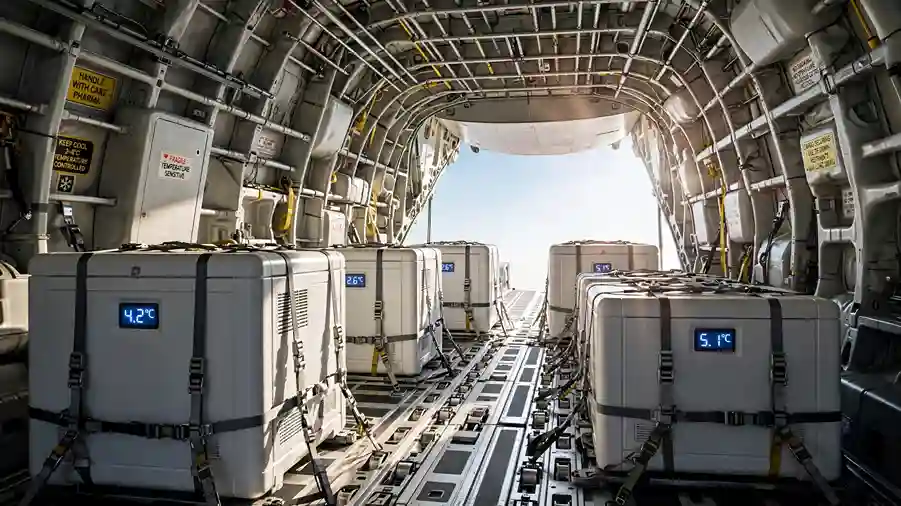
When absolute temperature integrity is non-negotiable, Skylinks Asia Aviation delivers. We charter freighters equipped for active cold chain logistics, moving life-saving vaccines, biologics, and high-value perishables across Asia, the Middle East & Africa.
By the Skylinks Asia Charter Desk · Reviewed by our Operations Team
Temperature excursions cost pharmaceutical companies millions and can cost lives. We source cargo aircraft capable of supporting active cooling containers (like Envirotainer and CSafe) and provide expedited ground handling to minimize tarmac exposure. From mRNA vaccines requiring deep freeze to fresh tropical fruit, we maintain the cold chain from origin to destination.
Cold chain air charter moves temperature-sensitive cargo — vaccines and biologics typically at +2°C to +8°C or deep-frozen down to -70°C — using active containers (Envirotainer RKN/RAP, CSafe) or passive insulated containers. The biggest cold-chain risk isn't the flight itself, it's ground time. A dedicated charter minimizes tarmac exposure versus routing through a scheduled network.
CEIV Pharma is IATA's certification program for pharmaceutical air logistics, established to give shippers a consistent way to verify that an airline, ground handler, or forwarder actually meets pharmaceutical cold-chain standards — not just claims to. It's often described as a "GDP-plus" standard: it incorporates Good Distribution Practice requirements used globally, WHO Annex 5 guidance, and IATA's own Temperature Control Regulations.
For a shipper, the practical takeaway is this: CEIV-certified partners have been independently audited on their facilities, equipment, and staff training specifically for temperature-sensitive cargo, and certified operations consistently report meaningfully fewer temperature excursions than non-certified counterparts.
Both container types show up in pharma and perishables logistics, and the right one depends on the shipment's risk tolerance and duration:
One detail worth flagging: dry ice used in passive containers is itself classified as a Class 9 dangerous good under IATA regulations because of the carbon dioxide gas it releases. Any cold chain shipment using dry ice needs to be handled under our dangerous goods charter protocols alongside the standard cold chain handling.
VIEW DANGEROUS GOODS CHARTERWe arrange WHO-compliant logistics for clinical trials, biologics, and global vaccine distribution. Our charter desk coordinates dry ice replenishment and active container leasing for strict +2°C to +8°C or deep-freeze requirements.
Maximize shelf life and minimize spoilage. We provide dedicated freighter charter for cut flowers, fresh seafood, and exotic fruits, ensuring rapid transit and ventilated temperature-controlled environments.
Need an active container (RKN or RAP) but lack scheduled flight access? We charter freighters specifically sized to carry your temperature-sensitive pallets, ensuring your container never sits idle waiting for commercial lift.
For humanitarian and NGO-driven vaccine or medical supply logistics specifically, see our humanitarian relief charter page to understand how we integrate cold chain capabilities into rapid-response crisis deployments.
HUMANITARIAN RELIEF CHARTERPrecision is everything in temperature-controlled logistics. Provide your commodity and temperature requirements, and our team will source aircraft with the proper cooling infrastructure and expedited handling capabilities.
Our cold chain desk handles perishable and pharma cargo enquiries through our secure contact form. Include your origin and destination airports, commodity type, temperature range, and pallet or weight details so we can source the right aircraft and container infrastructure without delay.
Your information is treated as confidential.
CEIV Pharma is an IATA certification verifying that an airline, ground handler, or forwarder's facilities, equipment, and staff meet pharmaceutical cold-chain standards, combining Good Distribution Practice requirements, WHO guidance, and IATA's own Temperature Control Regulations into a single audited standard.
Active containers, such as Envirotainer RKN/RAP or CSafe units, carry their own powered refrigeration and hold a set temperature regardless of external conditions. Passive containers rely on insulation and thermal mass, such as gel packs or dry ice, and suit shorter transit times or less sensitive cargo.
Standard pharma cold chain typically covers +2°C to +8°C for most vaccines and biologics, with deep-freeze options down to around -20°C, and ultra-cold options as low as -70°C for certain mRNA vaccine products, depending on the container and aircraft configuration used.
Yes. Dry ice is classified as a Class 9 dangerous good under IATA regulations because of the carbon dioxide gas it releases in an enclosed space, and any shipment using it must follow dangerous goods handling requirements in addition to standard cold chain protocols.
Most temperature excursions happen on the ground, not in the air — during tarmac transfers, connections, and customs delays common on a scheduled route. A dedicated charter minimizes those touchpoints and ground exposure time by controlling the full route and handling process directly.
Often, yes, since both rely on similar temperature-controlled aircraft and container infrastructure, though pharma shipments typically require stricter documentation, monitoring, and CEIV-certified handling than general perishables like produce or flowers.
A properly monitored shipment will flag the excursion via onboard data loggers, allowing the receiving party to assess whether the product's stability window was breached. Prevention through active containers, CEIV-certified handling, and minimized ground time is far preferable to managing an excursion after the fact.
Active container availability (Envirotainer, CSafe) and appropriately equipped aircraft should ideally be confirmed several days ahead for planned shipments, though genuinely urgent pharma or perishable moves can be prioritized through our urgent cargo charter desk.
Need to move temperature-sensitive pharma or perishables under emergency conditions? See our urgent cargo charter desk for how rapid dispatch works.
URGENT CARGO CHARTER DESK