Aviation Insights & Charter Pricing
How Much Does It Cost to Charter a Private Jet or Cargo Plane?
By the Skylinks Asia Charter Desk · Reviewed by our Operations Team · October 2026
By the Skylinks Asia Charter Desk · Reviewed by our Operations Team · October 2026
TL;DR: There is no fixed rate card for aircraft charter — pricing is quoted per mission, not per hour or per kilogram, because every flight combines a different aircraft, route, and set of ground costs. As a rough 2026 guide, private jet charter runs from about $1,500/hour for a turboprop up to $20,000+/hour for an ultra-long-range jet. Cargo charter runs from about $1,500–$6,000/hour for a small feeder aircraft up to $70,000–$110,000/hour for an Antonov An-124 outsize freighter, with most mid-range narrowbody freighter charters landing in the $8,000–$28,000/hour band. The aircraft category sets the baseline; positioning, permits, handling, and timing move the final number from there.
Scheduled airlines publish fares because they fly the same route on the same aircraft every day. Charter does not work that way. Every charter mission is quoted individually because it combines a specific aircraft, a specific routing (often including an empty positioning leg to reach you), specific airport and handling costs at both ends, and specific timing — demand on a given route on a given date moves the price as much as the aircraft itself does.
That is why charter brokers quote a mission price, not a per-kilo or per-seat rate: the quote covers aircraft hire, crew, fuel, navigation and overflight permits, and ground handling at both ends as one number, not a menu of separate line items the way scheduled freight or airline tickets are priced.
For the specific time-critical and AOG cost angle — including why urgent dedicated charter costs more than scheduled next-flight-out freight — see our urgent cargo charter guide.
Private jet charter is usually quoted — and shopped by buyers — as an hourly rate, since passenger charter missions tend to be simpler point-to-point trips without the ground-handling complexity cargo charter involves. 2026 industry pricing guides converge on roughly these bands:
| Aircraft Category | Example Aircraft | Passengers | Typical Hourly Rate (USD) |
|---|---|---|---|
| Turboprop / Very Light Jet | King Air, Citation Mustang | 4–8 | $1,500 – $4,000 |
| Light Jet | Citation CJ3+, Learjet 75 | 6–8 | $2,500 – $6,000 |
| Midsize / Super-Midsize Jet | Citation XLS+, Challenger 350 | 7–9 | $4,000 – $9,000 |
| Heavy Jet | Challenger 604, Legacy 650 | 10–16 | $8,000 – $15,000 |
| Ultra-Long-Range Jet | Global 7500, Gulfstream G650 | 12–19 | $10,000 – $20,000+ |
A short regional hop in a light jet might run $10,000–$20,000 all-in; a transcontinental trip in a heavy or ultra-long-range jet can run well into six figures once positioning and overnight costs are added. These are industry-estimate ranges, not fixed quotes — the only way to know your actual number is to put a specific route and date to a broker. Browse our private jet charter services or private jet fleet for aircraft-specific detail.
Cargo charter pricing follows the same mission-based logic but spans a far wider range, because the aircraft themselves span a far wider range — from a single-engine feeder carrying a few hundred kilograms to an Antonov An-124 carrying entire power-plant components.
| Aircraft Category | Example Aircraft | Typical Payload | Typical Hourly Rate (USD) |
|---|---|---|---|
| Small Feeder | Cessna Caravan | Up to 2 t | $1,500 – $6,000 |
| Narrowbody Freighter | 737-400SF, A321F | 18–25 t | $8,000 – $28,000 |
| Widebody Freighter | 767F, 777F | 50–100 t | $25,000 – $90,000+ |
| Outsize Freighter | Antonov An-124 | Up to 120 t | $70,000 – $110,000+ |
In practice, cargo charter is rarely discussed purely in per-hour terms — a full rotation (positioning flight out, load, flight to destination, return positioning) is what gets quoted as a single mission price. A short-haul narrowbody charter typically lands in the low tens of thousands of dollars all-in; a long-haul widebody mission scales into the mid-six figures; an An-124 outsize charter on a long intercontinental route can run into the high six figures and beyond.
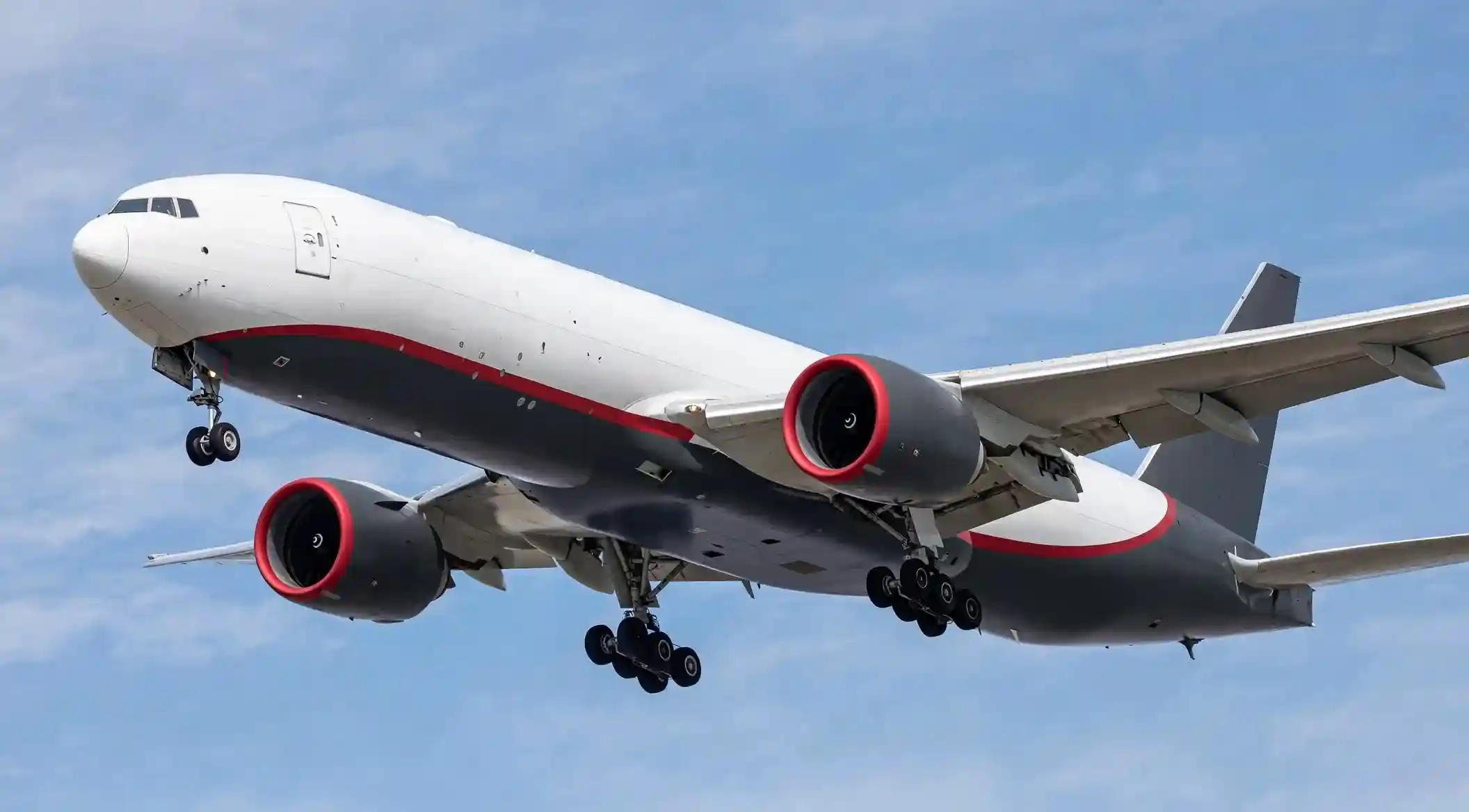
For aircraft selection guidance, see choosing the right cargo aircraft. For a widebody freighter example, see our Boeing 777 freighter charter page. For outsize and project cargo specifically, see outsize project cargo charter.
Beyond the aircraft category itself, the same handful of factors move almost every charter quote, cargo or passenger:
Time-critical cargo charter — including the AOG cost angle and how urgent dedicated charter differs from scheduled next-flight-out freight.
How heavy-lift and outsize project cargo moves by air, and which aircraft can take it.
How empty leg pricing works and how an aircraft already flying your route can be chartered at a significant discount.
Tell our charter desk your route, aircraft category, and date. We’ll source options across our operator network — including potential empty legs — and return a mission price, not a headline rate.