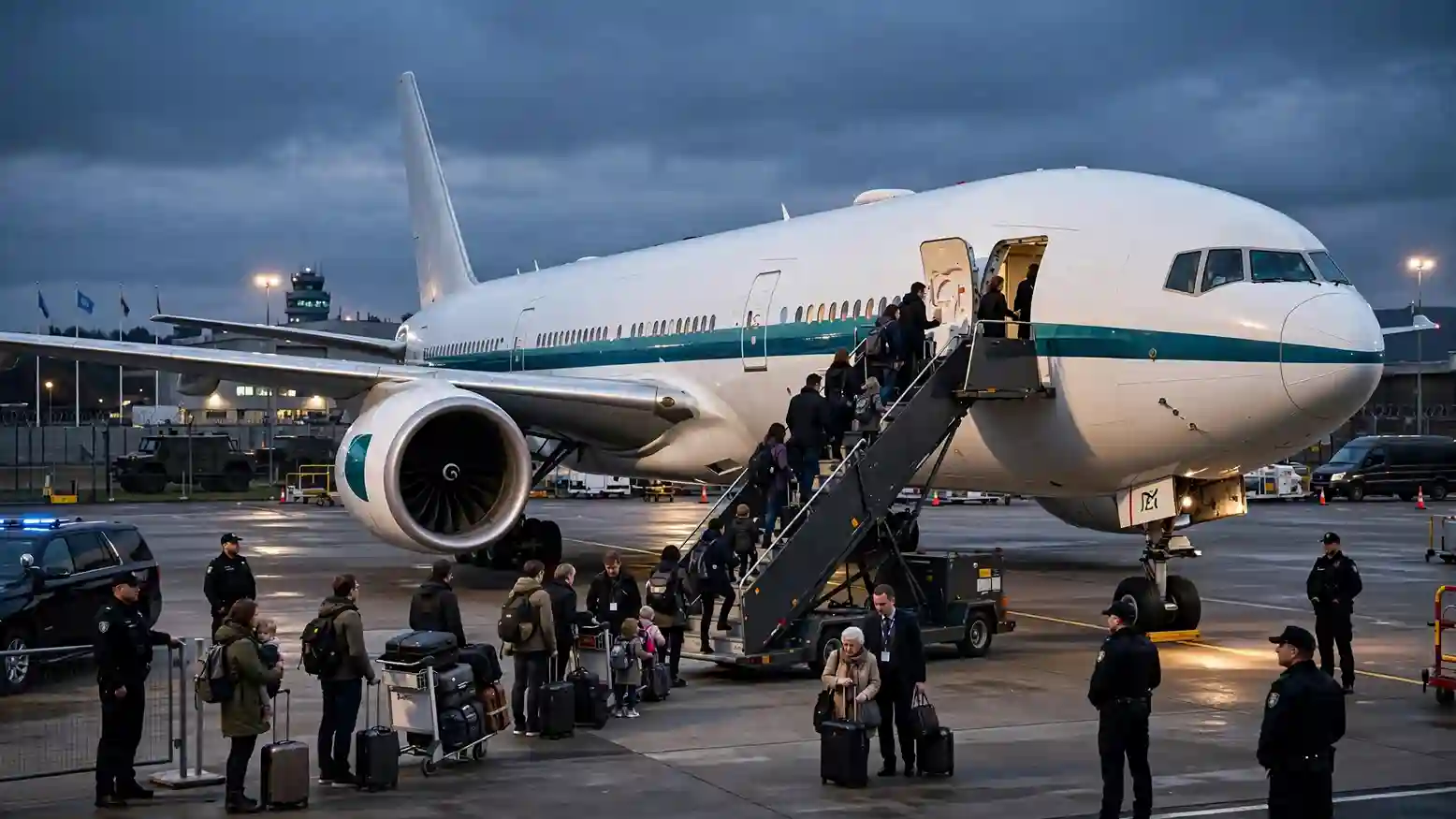
When national interests and citizen safety are paramount, Skylinks Asia Aviation delivers secure, discreet, and rapid air charter solutions. We facilitate diplomatic travel, embassy evacuations, and mass repatriation across Asia, the Middle East & Africa.
By the Skylinks Asia Charter Desk · Reviewed by our Operations Team
Government agencies and embassies require an aviation partner who understands the gravity of state business. Whether evacuating citizens from a crisis zone, moving a diplomatic delegation, or repatriating nationals, we provide a secure and discreet environment. We coordinate closely with state departments to ensure all overflight permits, diplomatic clearances, and ground security protocols are strictly enforced and confidentially handled.
Government and repatriation charter moves citizens, diplomatic staff, and officials when commercial aviation is unavailable, suspended, or unsafe — typically during armed conflict, civil unrest, natural disasters, or sudden border closures.
It differs from standard charter in three key ways: war-risk insurance often needs separate negotiation for conflict-affected airspace, overflight and landing permits require diplomatic-level clearance rather than routine commercial approval, and confidentiality and chain-of-custody protocols apply throughout.
Governments aren't legally obligated to evacuate citizens from crisis zones, but they do so consistently as a matter of policy and practice. The most common triggers include:
Commercial carriers suspend routes or airspace closes with little warning — a scenario that has prompted government-chartered flights for citizens in the Middle East, Sudan, and Afghanistan in recent years.
Rapid political changes where continued commercial access to an airport or country becomes uncertain, requiring state-organized extraction of diplomatic staff and citizens.
Earthquakes, floods, or severe storms where ground infrastructure and airport operations are damaged or overwhelmed, leaving commercial carriers unable to operate.
Embassies and government agencies also charter for scheduled official travel where security, confidentiality, or scheduling flexibility matter more than cost — not just during crises.
Standard charter logistics don't cover the realities of state operations. These four factors dictate how government and repatriation flights actually happen.
Standard aviation insurance policies frequently exclude or suspend coverage the moment a region is declared a conflict zone, even under an existing global policy. Arranging separate war-risk coverage for the specific airspace involved is often the first hurdle in a crisis charter, and it can take longer to resolve than sourcing the aircraft itself.
Overflight and landing permits for repatriation and government flights typically require clearance at a diplomatic level rather than routine commercial airport approval, particularly when the route crosses closed or contested airspace.
Passenger manifests, delegation itineraries, and any sensitive materials being transported are handled under strict confidentiality throughout, from booking through arrival. Chain-of-custody protocols apply to both passengers and cargo.
Even with urgency on the government's side, clearances between nations can move slower than the crisis itself — planning and pre-positioning matter as much as raw aircraft speed once a situation is already unfolding.
When conflict or natural disaster strikes, we rapidly mobilize widebody and narrowbody aircraft to evacuate citizens and embassy staff safely. We handle complex border and diplomatic clearances urgently.
Relief Cargo?Secure and private air travel for heads of state, ministers, and diplomats. We source VIP-configured aircraft and commercial airliners tailored to the security protocols of your delegation.
Corporate Delegations?We arrange highly secure cargo charter flights for the transport of sensitive government materials, diplomatic pouches, election ballots, and high-value state assets with complete chain-of-custody.
We operate with the utmost discretion. Provide your operational requirements through our primary contact form, and our liaison team will coordinate secure aircraft options and diplomatic clearances immediately.
For the fastest and most discreet response, use our primary contact form. Include origin, destination, required date, passenger count or cargo load, and the urgency level of your operation. For active crisis response, reach our 24/7 command center directly.
We typically respond within 2 hours. Your information is treated as confidential.
A NEO is the formal term for a government operation to evacuate citizens, diplomatic staff, and sometimes third-country nationals from a location where their safety is at risk, coordinated between diplomatic authorities and, where military assets are involved, defense agencies. Most citizen repatriation flights during a crisis fall under this kind of coordinated effort, even when the aircraft itself is a chartered civilian airliner rather than a military transport.
Commercial carriers frequently suspend routes, cancel flights, or stop serving an airport entirely once a region becomes unstable, exactly when demand to leave is highest. A dedicated charter gives a government direct control over scheduling, routing, and prioritization of vulnerable travelers that commercial capacity can no longer guarantee.
War-risk insurance is separate coverage required when standard aviation insurance excludes or suspends protection for a conflict-affected region. Because coverage can be suspended with little notice once an area is declared unstable, arranging appropriate war-risk coverage is often one of the first and most time-sensitive steps in organizing a crisis charter.
Aircraft can often be sourced quickly, but the realistic timeline usually depends more on securing diplomatic overflight and landing clearances than on aircraft availability — those approvals can take longer to negotiate than the flight itself, particularly for closed or contested airspace.
Mass citizen evacuation typically uses widebody or narrow-body aircraft configured for higher passenger counts, prioritizing capacity. Diplomatic delegation travel more often uses VIP-configured aircraft, similar to the executive and VIP airliner categories used for corporate delegation travel, prioritizing security and confidentiality over headcount.
Yes, in most cases. Overflight and landing permissions for government and repatriation flights are typically negotiated at a diplomatic level rather than through routine commercial airport channels, especially for routes crossing contested or closed airspace.
Private companies with staff in an affected region, and NGOs coordinating with government authorities, do charter their own evacuation flights during a crisis — it isn't limited to state actors. The core logistics (war-risk insurance, clearances, prioritization) are similar, though a private charter doesn't carry the same diplomatic-level clearance advantages a government flight may have.
Repatriation charter is focused on moving a government's own citizens, diplomatic staff, or officials out of a crisis area. Humanitarian relief charter moves aid, medical supplies, and relief personnel into a crisis or disaster area, usually on behalf of NGOs or aid agencies rather than a national government evacuating its own people. See our humanitarian relief charter page for that side of crisis logistics.